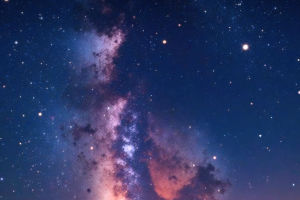
Look up at the night sky, and you'll see thousands of stars, some brighter than others. But did you know all those stars belong to a single vast system?
It's called the Milky Way—a swirling galaxy that holds not just stars, but planets, nebulae, black holes, and much more.
Our Earth orbits a star within this galaxy, and it's the very place where humanity's story began. But what makes the Milky Way so special, and how does it fit into the bigger universe?
What is the Milky Way?
The Milky Way is a barred spiral galaxy, which means it has a central bar-shaped structure made of stars, and spiraling arms that radiate outward. It's just one of billions of galaxies in the universe, but it's our cosmic home.
The size of the Milky Way: This galaxy is enormous. It spans about 100,000 light-years across and contains somewhere between 100 and 400 billion stars. To put that in perspective, a single light-year is about 5.88 trillion miles (9.46 trillion kilometers).
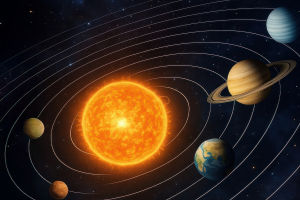
The star system: The Sun, which provides us with light and warmth, is just one star in a vast system. But it's a unique star in that it's located in one of the galaxy's spiral arms, called the Orion Arm.
The galactic center: At the center of the Milky Way lies a supermassive black hole, called Sagittarius A*. Though it's not something we can see directly, it has a profound effect on the galaxy's motion, influencing stars and other objects near it.
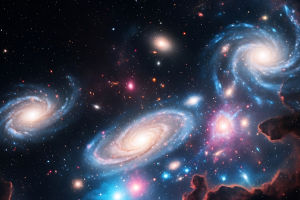
While the Milky Way might feel immense, it's only one galaxy in a universe full of them. But it's the one we call home.
Our Solar System's Place in the Galaxy
The Milky Way is home to a dizzying array of stars, planets, and other celestial bodies. So, where does our Solar System fit in all of this?
Our location: Our Solar System resides in the Orion Arm, about 27,000 light-years from the galactic center. Despite the vastness of the galaxy, we're relatively close to the middle, which gives us a unique view of the stars.
The galactic orbit: Like all stars, the Sun orbits the center of the Milky Way. It takes approximately 230 million years to complete one orbit around the galaxy. This journey through the stars is called a galactic year.
The potential for life: The Milky Way is vast, but within that space, there are billions of planets that could host life, especially those in the "habitable zone," where conditions might allow for liquid water. This makes our galaxy an exciting place to search for extraterrestrial life.
Though we may seem small in the grand scheme of things, our Solar System is located in a region of the Milky Way that's ripe for discovery.
Exploring the Milky Way: Technology and Missions
Over the years, humanity has developed technology to peer deeper into the Milky Way and beyond. Telescopes, space missions, and advanced algorithms have unlocked many of the galaxy's mysteries, but there's still so much to discover.
The Hubble Space Telescope: This iconic telescope has captured some of the most breathtaking images of the Milky Way. By observing distant stars and nebulae, Hubble has helped scientists understand how galaxies form and evolve.
The Voyager Probes: Launched in the 1970s, NASA's Voyager 1 and 2 spacecraft have traveled farther from Earth than any human-made objects. They've provided a unique perspective of our Solar System's edge and are now entering interstellar space.
The James Webb Space Telescope: Set to launch in the near future, this next-generation telescope will help scientists peer deeper into the Milky Way and beyond. With its advanced infrared capabilities, Webb will allow us to study the formation of stars and galaxies in ways we couldn't before.
These tools are not only helping us understand our galaxy but also sparking the curiosity of future generations of explorers.
The Future of Our Galaxy
While the Milky Way has existed for billions of years, the future of our galaxy—and our place in it—is still unfolding. Over the next few billion years, several events will shape its destiny.
The Andromeda collision: One of the most exciting (and terrifying) events on the horizon is the collision between the Milky Way and the Andromeda Galaxy, which is currently on a collision course with us. Don't worry, though—it won't happen for another 4.5 billion years.
Stellar evolution: As stars in the Milky Way continue to age, new stars will form from the gas and dust in the galaxy. This continuous cycle of birth and death is what keeps the galaxy dynamic.
The search for life: With thousands of exoplanets discovered, the question of whether life exists elsewhere in the Milky Way remains one of the most tantalizing mysteries. Future space missions may one day bring us closer to answering this question.
As the galaxy evolves, so will our understanding of it. Who knows what incredible discoveries await us in the future?
Conclusion: Our Place in the Universe
The Milky Way is a vast, complex, and beautiful galaxy—a home to billions of stars, countless planets, and infinite possibilities. Our Earth may be just a small speck in this cosmic ocean, but it's the only home we've ever known. As technology advances and our exploration of the stars continues, humanity will likely uncover more secrets of our galaxy, potentially leading to greater discoveries about our place in the universe.
For now, the Milky Way remains our cosmic backyard, and we're just beginning to understand the incredible wonders it holds.