Have you ever wondered how galaxies like the Milky Way came into existence?
Imagine an enormous cloud of gas and dust floating in the vastness of space. Over billions of years, this cloud can collapse under its own gravity to form stars, planets, and—eventually—galaxies.
The process of galaxy formation is one of the most fascinating mysteries in the universe.
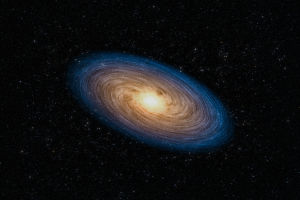
When we peer into the night sky, we often see galaxies as luminous clusters of stars, gas, and dust, all bound together by gravity. But these systems weren't always so neatly packed together. In fact, galaxies began as much smaller, scattered collections of material that slowly came together to form the massive structures we see today.
The Birth of Stars: From Gas to Light
The heart of galaxy formation starts with the birth of stars. Early in the universe's history, after the cosmic explosion, the cosmos was mostly hydrogen and helium. These elements formed dense clouds, and as gravity pulled the gas together, these clouds began to collapse.
When the gas clouds reached high enough temperatures and pressures, nuclear fusion ignited, and the first stars began to form. These stars lit up the universe and were essential to the creation of galaxies. Over time, stars grouped together due to their gravitational attraction, and clusters began to form. These early clusters of stars eventually coalesced into the first galaxies.
1. Early Gas Clouds: Hydrogen and helium dominated the early universe.
2. Star Formation: Gravity triggered the collapse of these clouds, creating stars.
3. Cluster Formation: Stars grouped into clusters, eventually becoming galaxies.
The process of star formation continues today, especially in areas known as star-forming regions, such as the Orion Nebula. Without the formation of stars, galaxies would have remained dark and cold.
The Role of Dark Matter in Galaxy Formation
While gas and stars are vital to galaxy formation, another mysterious component called dark matter plays a crucial role. Dark matter is an invisible substance that doesn't emit light or energy, but scientists know it exists because of its gravitational effects on visible matter.
Dark matter helps galaxies form by providing the necessary gravitational pull to draw gas and dust together. It acts as a cosmic scaffolding, shaping the structure of galaxies. Without dark matter, galaxies would struggle to form the large-scale structures we observe in the universe today.
For example, the spiral structure of the Milky Way is largely due to the gravitational influence of dark matter. Even though we can't directly observe dark matter, we can see its effects on galaxy formation and evolution.
Galaxy Collisions and Mergers
Not all galaxy formation is peaceful. Over time, galaxies can collide and merge, which is a natural part of the evolutionary process. When galaxies collide, their stars typically don't collide because they are so far apart, but the gas and dust interact, often triggering new rounds of star formation.
One of the most famous examples of a galactic collision is the merging of the Milky Way and the Andromeda Galaxy. Scientists predict that in about 4 billion years, the two galaxies will collide, leading to the creation of a new, larger galaxy. During this collision, a vast amount of gas and dust will be compressed, sparking the formation of countless new stars.
- Star Formation from Collisions: When galaxies collide, gas clouds compress, leading to bursts of star formation.
- The Milky Way and Andromeda Collision: A well-known example of an impending galactic merger.
While this may sound like a catastrophic event, it's actually part of the ongoing evolution of the universe. These mergers play a role in the growth and evolution of galaxies, making them more massive and complex over time.
The Evolution of Galaxies: From Young to Old
Over billions of years, galaxies evolve. In their early stages, they are full of gas and dust, making them active sites for star formation. But as time passes, these materials are used up or dispersed. The once-energetic star-forming regions begin to die down, and the galaxy transitions to a more quiescent phase.
Some galaxies, like elliptical galaxies, stop forming new stars and become populated primarily by older stars. Others, like spiral galaxies, continue to form stars, maintaining their dynamic appearance.
For example, the Milky Way, our home galaxy, is still actively forming new stars in regions like the Orion Arm. However, over time, this rate will slow down as the galaxy's gas supply dwindles.
- Active Phase: Galaxies begin their life with plenty of gas, making them star-forming hubs.
- Mature Phase: As gas runs out, the star formation rate decreases, and galaxies evolve into their final shape.
- Elliptical vs. Spiral: Some galaxies stop forming stars, while others continue to do so.
The evolutionary journey of a galaxy can take billions of years, and every stage is critical in shaping the overall structure and appearance of galaxies across the universe.
The Future of Galaxy Formation
Today, astronomers are using advanced telescopes to peer into the distant past and study how galaxies were formed. By observing galaxies that are billions of light-years away, we can see them in their early stages and better understand the forces at work during their formation.
With upcoming space missions and new technologies, scientists hope to learn even more about the detailed process of galaxy formation. These discoveries may eventually help us answer some of the deepest questions about the origin of galaxies, including our own.
The Infinite Mystery
The story of galaxy formation is far from over. Every time we look up at the night sky, we're witnessing a small part of this ongoing cosmic evolution. Galaxies continue to grow, merge, and evolve, and each one holds a history of millions, even billions, of years.
As we continue to explore the universe, we're uncovering new chapters in the story of our cosmic home, and who knows what discoveries the future will bring.