I remember sitting in a quiet lecture hall in 2015 when the news broke. A physicist showed a simple, wiggling line on a graph. "We just heard it," he said, voice thick with awe. That line was a gravitational wave.
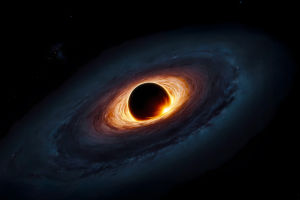
It was a direct recording of two black holes, each vastly heavier than our sun, merging over a billion years ago. We weren't seeing it.
We were feeling it—a vibration in the fabric of reality that had finally reached us. Astronomy moved from a visual to a sonic universe that day.
How to Hear a Black Hole Dance
The detection is a triumph of precision. Instruments like LIGO and Virgo don't use telescopes. They use lasers. Each observatory has two long, perpendicular arms. A laser beam is split and sent down each one. In perfect calm, the beams return and cancel each other out. But a passing gravitational wave subtly stretches one arm and compresses the other.
This tiny change alters the laser light's travel time. The beams no longer cancel out perfectly. A faint signal appears. This change is unbelievably small—a fraction of the width of a proton over 4 kilometers. Filtering this signal from Earth's constant noise is the core challenge.
The Choreography of a Cosmic Crash
The signal tells a precise story. First, you hear the inspiral. The black holes orbit each other faster and faster, emitting waves that steal their energy. The signal's frequency and amplitude rise in a characteristic "chirp." Then comes the merger. The two event horizons touch and become one distorted, vibrating horizon. This produces the peak of the wave, the loudest moment.
Finally, there's the ringdown. The new, single black hole settles into a stable shape, "ringing" like a bell struck by a hammer. The waves fade as the last vibrations smooth out. Each phase encodes the black holes' masses and spins.
What the Waves Are Telling Us
These detections are rewriting astrophysics textbooks. They provide direct proof of stellar-mass black hole binaries. We now know such pairs are common. The waves reveal their masses and spins. Some black holes are far heavier than expected from supernova models. This hints at new formation pathways, perhaps from earlier mergers.
By comparing arrival times at different detectors, scientists can triangulate the source's rough sky location. This allows telescopes to search for any fleeting light from the event. Most profoundly, the waves test General Relativity in extreme gravity. So far, Einstein's predictions hold perfectly, even in this violent regime.
To me, this is the most profound shift. For centuries, we studied the universe by collecting light. Now, we have a new sense. We can feel its most violent motions. We are listening to the background hum of collisions happening across the cosmos. Each new "chirp" is a message from the dark, telling us about worlds we could never see. The universe is no longer a silent movie. It's a symphony, and we've just learned to hear the deepest notes.